sin to know for whom the bell tolls

Showing posts with label Change. Show all posts

Sunday, July 27, 2008

Service: The Core of Change

One important branch of Obama's campaign is HOPE IN ACTION. This part of the movement (which will continue after he is elected in November and takes office in January) is all about community service. The idea is that we need more than political action to create the changes that this country desperately needs.

We need to roll up our sleeves and work for the change we need!

On Saturday, the local Hope in Action campaign kicked off with a clean-up of Lake Merritt. Over 30 Obama supporters picked up garbage, cleaned up goose poop, raked leaves, and generally beautified Lake Merritt.

We worked with Noel Gallo from Keep Oakland Beautiful (Oakland Public Works) & James Robinson from the Lake Merritt Institute, who organize weekly clean-up projects at Lake Merritt every Saturday & Tuesday (to get involved click here).

We also spoke with folks who were out enjoying the day at the lake about Obama, gave out Obama '08 stickers, told people about the grand opening of the East Bay office, and even registered several voters. People were really grateful for the work that we did to make their experience at Lake Merritt more enjoyable, and I think it is really important to demonstrate with actions (not only words in dramatic speeches) that change is something we can not only believe in, but change is something we will work hard to create.

The success of this event shows how important the HOPE IN ACTION and community service aspects of the campaign are. Barack Obama believes in service to one's community, local organizing for collective benefit, and working towards empowerment together within and among neighborhoods.
“Your own story and the American story are not separate — they are shared. And they will both be enriched if we stand up together, and answer a new call to service to meet the challenges of our new century … I won't just ask for your vote as a candidate; I will ask for your service and your active citizenship when I am president of the United States. This will not be a call issued in one speech or program; this will be a cause of my presidency.” --Barack Obama
A Call to Service: Colorado Springs, Colorado


Obama's policies focus on the role of service in the enactment of "change" that is echoed throughout his campaign speeches. You can read more about Obama's policies on service by clicking here. This is excerpted from an AP article after the Colorado speech above reflecting on Obama's service initiatives (more click here).
Other highlights include: increasing the all-volunteer military, expanding AmeriCorps, doubling the size of the Peace Corps, expanding YouthBuild, in which low-income young people build affordable housing; expanding service programs involving retired people and anyone over 55, and creating a tax credit making the first $4,000 of college tuition free for students who conduct 100 hours of public service a year.
When Barack Obama is president, he will enable all Americans to engage in service to our country. Here are some of his programs and policy initiatives that will build a strong service corps to keep this country functioning well:
  • Expand Corporation for National and Community Service: Obama will expand AmeriCorps from 75,000 slots today to 250,000 and he will focus this expansion on addressing the great challenges facing the nation. He will establish a Classroom Corps to help teachers and students, with a priority placed on underserved schools; a Health Corps to improve public health outreach; a Clean Energy Corps to conduct weatherization and renewable energy projects; a Veterans Corps to assist veterans at hospitals, nursing homes and homeless shelters; and a Homeland Security Corps to help communities plan, prepare for and respond to emergencies.
  • Engage Retiring Americans in Service on a Large Scale: Older Americans have a wide range of skills and knowledge to contribute. Obama will expand and improve programs that connect individuals over the age of 55 to quality volunteer opportunities.
  • Expand the Peace Corps: Obama will double the Peace Corps to 16,000 by 2011. He will work with the leaders of other countries to build an international network of overseas volunteers so that Americans work side-by-side with volunteers from other countries.
  • Show the World the Best Face of America: Obama will set up an America's Voice Initiative to send Americans who are fluent speakers of local languages to expand our public diplomacy. He also will extend opportunities for older individuals such as teachers, engineers, and doctors to serve overseas.
Obama will integrate service into education in America at all levels:
  • Expand Service-Learning in Our Nation's Schools: Obama will set a goal that all middle and high school students do 50 hours of community service a year. He will develop national guidelines for service- learning and will give schools better tools both to develop programs and to document student experience.
  • Expand YouthBuild Program: Obama will expand the YouthBuild program, which gives disadvantaged young people the chance to complete their high school education, learn valuable skills and build affordable housing in their communities. He will grow the program so that 50,000 low-income young people a year a chance to learn construction job skills and complete high school.
  • Require 100 Hours of Service in College: Obama will establish a new American Opportunity Tax Credit that is worth $4,000 a year in exchange for 100 hours of public service a year.
  • Promote College Serve-Study: Obama will ensure that at least 25 percent of College Work-Study funds are used to support public service opportunities instead of jobs in dining halls and libraries.
This video focuses on Obama's initiative to create a fund that would provide $4,000/year to every American who wishes to go to college in exchange for 100 hours of community service.


Obama gave this speech on a college campus in Iowa in December 2007 (full speech here):

When I was about your age, I decided to become a community organizer.... this small group of churches on the south side of Chicago ... offered me a job to come help neighborhoods devastated by steel-plant closings. My mother and grandparents wanted me to go to law school. My friends were applying to jobs on Wall Street. I didn't know a soul in Chicago, and the salary was about $12,000 a year, plus $2,000 to buy an old, beat-up car.

I still remember a conversation I had with an older man before I left. He looked and said, "Barack, I'll give you a bit of advice. Forget this community organizing business and do something that's gonna make you some money. You can't change the world, and people won't appreciate you trying. You've got a nice voice. What you should do is go into television broadcasting. I'm telling you, you've got a future."

Now, he may have had a point about the TV thing. And to tell you the truth, I didn't have a clear answer about what I was doing. I wanted to step into the currents of history and help people fight for their dreams, but didn't know what my role would be. I was inspired by what people like Harris did in the civil rights movement, but when I got to Chicago, there were no marches, no soaring speeches. In the shadow of an empty steel plant, there were just a lot of folks struggling. Day after day, I heard ‘no' a lot more than I heard ‘yes.' I saw plenty of empty chairs in those meetings we put together.

But even as I discovered that you can't bend history to your will, I found that you could do your part to see that - in the words of Dr. King - it "bends toward justice." In church basements and around kitchen tables, block by block, we brought the community together, registered new voters, fought for new jobs, and helped people live lives with some measure of dignity.

Eventually, I realized I wasn't just helping other people. Through service, I found a community that embraced me; a church to belong to; citizenship that was meaningful; the direction I'd been seeking. Through service, I found that my own improbable story fit into a larger American story.

In America, each of us seeks our own dreams, but the sum of those dreams must be greater than ourselves. Because the America we inherited is the legacy of those who struggled, and those who served in so many ways, before us....

It is time to recapture that sense of a common purpose: I am my brother's keeper, I am my sister's keeper. I'm tired of hearing about how America is on the wrong track - I want us to come together to put it on the right track. I'm tired of hearing about red America and blue America - I want to lead a United States of America. I'm tired of talking about what we can't do, or won't do, or won't even try - I want all of us to stand up and to start reaching for what is possible.

That's what history calls us to do. Because loving your country shouldn't just mean watching fireworks on the 4th of July; loving your country must mean accepting your responsibility to do your part to change it. And if you do stand up, I promise you that your life will be richer, and our country will be stronger.

We need your service, right now, in this moment - our moment - in history. I'm not going to tell you what your role should be; that's for you to discover. But I am going to ask you to play your part; ask you to stand up; ask you to put your foot firmly into the current of history. I am asking you to change history's course. And if I have the fortune to be your President, decades from now - when the memory of this or that policy has faded, and when the words that we will speak in the next few years are long forgotten - I hope you remember this as a moment when your own story and the American story came together, and history bent once more in the direction of justice.

Wednesday, July 9, 2008

Letter from a Birmingham Jail

Today there is a unique event by supporters of Barack Obama. One blogger, Jake B. suggested that we take some time today to read Martin Luther King's Letter from a Birmingham Jail. He posted the full letter to his blog.

I hope you'll take a few minutes to read the letter: it is a bit lengthy, but fully worth the time it takes to read it (ok, ok the blog post is kind of long too but it's packed with lots of interesting stuff for you!).

In Dr. King's words:
Never before have I written so long a letter. I'm afraid it is much too long to take your precious time. I can assure you that it would have been much shorter if I had been writing from a comfortable desk, but what else can one do when he is alone in a narrow jail cell, other than write long letters, think long thoughts and pray long prayers?
Dr King wrote about the importance of unity and the common fate the binds us all together:
I am cognizant of the interrelatedness of all communities and states. I cannot sit idly by in Atlanta and not be concerned about what happens in Birmingham. Injustice anywhere is a threat to justice everywhere. We are caught in an inescapable network of mutuality, tied in a single garment of destiny. Whatever affects one directly, affects all indirectly. Never again can we afford to live with the narrow, provincial "outside agitator" idea. Anyone who lives inside the United States can never be considered an outsider anywhere within its bounds.
For more on Martin Luther King, check out Wikipedia, the Official MLK Center Website, and the Nobel Peace Prize Website.

The Letter from a Birmingham Jail is addressed to southern Christian religious leaders who had criticized his methods.
Seldom do I pause to answer criticism of my work and ideas. If I sought to answer all the criticisms that cross my desk, my secretaries would have little time for anything other than such correspondence in the course of the day, and I would have no time for constructive work. But since I feel that you are men of genuine good will and that your criticisms are sincerely set forth, I want to try to answer your statement in what I hope will be patient and reasonable terms.
Here is some background on how MLK was arrested in Birmingham and ended up in jail, where he composed the letter.


One of the most important messages that Dr. King brought to the American people is the "Urgency of Now"
For years now I have heard the word "Wait!" It rings in the ear of every Negro with piercing familiarity. This "Wait" has almost always meant "Never."

We must come to see, with one of our distinguished jurists, that "justice too long delayed is justice denied."
We have waited for more than 340 years for our constitutional and God given rights. The nations of Asia and Africa are moving with jetlike speed toward gaining political independence, but we still creep at horse and buggy pace toward gaining a cup of coffee at a lunch counter.

Perhaps it is easy for those who have never felt the stinging darts of segregation to say, "Wait."

But when you have seen vicious mobs lynch your mothers and fathers at will and drown your sisters and brothers at whim; when you have seen hate filled policemen curse, kick and even kill your black brothers and sisters;

when you see the vast majority of your twenty million Negro brothers smothering in an airtight cage of poverty in the midst of an affluent society;

when you suddenly find your tongue twisted and your speech stammering as you seek to explain to your six year old daughter why she can't go to the public amusement park that has just been advertised on television, and see tears welling up in her eyes when she is told that Funtown is closed to colored children, and see ominous clouds of inferiority beginning to form in her little mental sky, and see her beginning to distort her personality by developing an unconscious bitterness toward white people;

when you have to concoct an answer for a five year old son who is asking: "Daddy, why do white people treat colored people so mean?"; ...

when your first name becomes "nigger," your middle name becomes "boy" (however old you are) and your last name becomes "John," and your wife and mother are never given the respected title "Mrs.";

when you are harried by day and haunted by night by the fact that you are a Negro, living constantly at tiptoe stance, never quite knowing what to expect next, and are plagued with inner fears and outer resentments;

when you are forever fighting a degenerating sense of "nobodiness"--then you will understand why we find it difficult to wait.


There comes a time when the cup of endurance runs over, and men are no longer willing to be plunged into the abyss of despair.
Barack Obama has recently spoken about the Urgency of Now, invoking Dr. King's message of action, hope, faith, unity, and the need to act now to reverse the deterioration of our country (our "moral deficit" and our "empathy deficit").

Of course, everyone knows Obama talks a lot about hope, as Dr. King did.

"I couldn't have gotten here without some hope!

My daddy left me when I was 2 years old
I needed some hope to get here!
I was raised by a single mother
I needed some hope to get here!
I got in trouble when I was a teenager;
did some things folks don't like to talk about

I needed some hope to get here!

I wasn't born into money or great wealth or great privilege or status

I was given love, an education and some hope
That's what I got!
that's my birthright!

so I talk about hope
I put "hope" on my campaign signs
doesn't even have my name on them sometimes: just says "HOPE"! ...

Some ... say I'm peddling false hopes, 'get a reality check' they tell me...
the implication is that if you are hopeful
that you somehow must be engaging in wishful thinking,
your head must be in the clouds,
that you must be passive and just sit back and wait for things to happen to you...


and so I have to explain to people: That's not what hope is
Hope is not blind optimism:
Hope is not ignorance of the barriers, and hurdles, and hazards that stand in your way
Hope is just the opposite!...

Nothing in this country worthwhile has ever happened

except someone somewhere decided to hope


That's how this country was founded because a group of patriots decided they were going to take on the British Empire:
no one was putting their money on them.

That's how slaves and abolitionists resisted that evil system
That's how a new President was able to chart a course to ensure that this nation would no longer remain half slave and half free.

That's how the greatest generation defeated fascism
and overcame a great depression

That's how women won the right to vote
That's how workers won the right to organize

That's how young people and old people and middle-aged folks were willing to walk instead of riding the buses and
folks came down on freedom rides
They marched, and they sat in, and they were beaten,
and firehoses were set on them

and dogs were set on them
and some went to jail
and some died for freedom's cause


That is what hope is:
imagining and fighting for and struggling for
and sometimes dying for

what didn't seem possible before

there's nothing naive about that

There's no false hopes in that

I don't believe in false hopes

If John F. Kennedy
had looked up at the moon

and said,


"That's too far!

False Hopes:
We CAN'T go there!"


If Dr. King had stood
on the Lincoln Memorial


and said,

"Y'all Go home!
We
CAN'T overcome!"


There's no such thing as false hopes, but what I know deep in my heart is that we cannot bring about change unless we are united."


"Unity is the great need of the hour.
That is what Dr. King said. It is the great need of this hour as well.
Not because it sounds pleasant, not because it makes us feel good
but it is because it is the only way we can overcome
the essential deficit that exists in this country...


Unity is the great need of the hour.
Unity is how we shall overcome!
"


Obama spoke at Dr. King's church in Georgia on MLK's birthday this year. His remarks are thoughtful, reverent, and contemporary (it is a long speech--about 30 minutes, but it is worth watching until the end for an amazing story about "Ashley"):

Barack Obama: January 20th, 2008
Atlanta, Georgia: Ebenezer Baptist Church

"In the words of Dr. King:
'We are all tied together in a single garment of destiny'...

If we are honest with ourselves,
we must admit that none of our hands are entirely clean...

Let us say that on this day of all days, each of us carries with us the task
of changing our hearts and minds:
the divisions, the stereotypes, the scape-goating,
the ease with which we we blame the plight of ourselves on others;
All of that distracts us from the common challenges that we face:
war and poverty, inequality and injustice!

We can no longer afford to build ourselves up by tearing each other down!
We can no longer afford to traffick in lies or fear or hate:
it is the poison that we must purge from our politics,
the wall that we must tear down before the hour grows too late.

Because if Dr. King could love his jailer,
if he could call upon the faithful
who once sat where you do to forgive those
who had set dogs and firehoses upon them,

then surely we could look past what divides us in our time
and bind up our wounds and
erase the sympathy deficit that exists in our hearts.
But if changing our hearts and minds is the first critical step:
we cannot stop there!"

During one of the million Democratic primary debates, the candidates were asked whom they thought Dr. King would support for President if he were alive during this election season. Each candidate had a perfect little answer about why MLK would have supported them, but Barack Obama's answer surprised me (in a way that I am now accustomed to--Barack has a way of stepping outside the box and giving a thoughtful honest answer, rather than spitting out a perfectly rehearsed soundbite).
Obama said King would not endorse any of them:
"He would call on the American people to hold us accountable." King, said Obama, believed as he does that "change does not happen from the top down ... it happens from the bottom up."

Dr. King: "1963 is not an end, but a beginning!"

Dr. King outlined the strategy behind the nonviolent protests and acts of civil disobedience that he had been organizing in his letter from a Birmingham Jail:
You may well ask: "Why direct action? Why sit ins, marches and so forth? Isn't negotiation a better path?" ...

Nonviolent direct action seeks to create such a crisis and foster such a tension that a community which has constantly refused to negotiate is forced to confront the issue. It seeks so to dramatize the issue that it can no longer be ignored.

My citing the creation of tension as part of the work of the nonviolent resister may sound rather shocking. But I must confess that I am not afraid of the word "tension." I have earnestly opposed violent tension, but there is a type of constructive, nonviolent tension which is necessary for growth....

The purpose of our direct action program is to create a situation so crisis packed that it will inevitably open the door to negotiation.
Dr. King also addressed the ethical confound of breaking the law:

You express a great deal of anxiety over our willingness to break laws. This is certainly a legitimate concern. Since we so diligently urge people to obey the Supreme Court's decision of 1954 outlawing segregation in the public schools, at first glance it may seem rather paradoxical for us consciously to break laws.

One may well ask: "How can you advocate breaking some laws and obeying others?"

The answer lies in the fact that there are two types of laws: just and unjust. I would be the first to advocate obeying just laws. One has not only a legal but a moral responsibility to obey just laws. Conversely, one has a moral responsibility to disobey unjust laws. I would agree with St. Augustine that "an unjust law is no law at all."
And specifically discussed civil disobedience as obedience to a higher law:
I submit that an individual who breaks a law that conscience tells him is unjust, and who willingly accepts the penalty of imprisonment in order to arouse the conscience of the community over its injustice, is in reality expressing the highest respect for law.

Of course, there is nothing new about this kind of civil disobedience.... In our own nation, the Boston Tea Party represented a massive act of civil disobedience.

We should never forget that everything Adolf Hitler did in Germany was "legal" and everything the Hungarian freedom fighters did in Hungary was "illegal." It was "illegal" to aid and comfort a Jew in Hitler's Germany. Even so, I am sure that, had I lived in Germany at the time, I would have aided and comforted my Jewish brothers.
Here is video footage of MLK talking about the strategy of the Civil Rights Movement in America:


"But there is something I must say to my people,
who stand on the warm threshold
which leads into the palace of justice:


In the process of gaining our rightful place,
we must not be guilty of wrongful deeds.
Let us not seek to satisfy our thirst for freedom
by drinking from the cup of bitterness and hatred!

We must forever conduct our struggle
on the high plane of dignity and discipline.
We must not allow our creative protests
to degenerate into physical violence

Again and again

We must rise to the majestic heights
of meeting physical force with soul force!"


OK I love this song: and the references to MLK and Jesus are thinly veiled (if they are veiled at all). This video has paired up some powerful historic photographs with U2's song "Pride (In the Name of Love)" and Dr. King's speeches; since I saw the video the song doesn't sound right without Dr. King's words mixed in there. Enjoy:
"Early morning, April 4th:
a shot rings out in the Memphis sky

'Free at last'; they took your life
They could not take your pride.
In the name of love
One more in the name of love"

On April 3, 1968, the day before Martin Luther King was assassinated in Memphis, he spoke these words:
Like anybody I would like to live a long life:
longevity has its place;

but I'm not concerned about that now.
I just want to do God's will
and He has allowed me to go up to the mountain

and I have looked over and I've seen the promised land
I may not get there with you,
but I want you to know tonight that we as a people will get to the promised land
so I'm happy tonight.
I'm not worried about anything!
I'm not fearing any man!

Mine eyes have seen the glory of the coming of the Lord!
Five years earlier, in 1963, Martin Luther King closed his letter from a Birmingham jail with this. I invite you to hope with me:
Let us all hope that the dark clouds of racial prejudice will soon pass away and the deep fog of misunderstanding will be lifted from our fear drenched communities, and in some not too distant tomorrow the radiant stars of love and brotherhood will shine over our great nation with all their scintillating beauty.

Tuesday, July 8, 2008

Platform of and by the People

Listening to America:
The Democratic Party's New Platform for a New Century

Barack Obama sent out an email to supporters today:
Every four years, the Democratic Party assembles a platform that outlines the party's position on a number of issues.

Traditionally, the drafting of the platform is not open to ordinary people.

This year, that's going to change.

For two weeks in July, people all across America will hold Platform Meetings in their own communities to discuss the issues and share their input. The outcome of these meetings will be reviewed by the Drafting Committee as it creates the final Platform.

No political experience is required. Your thoughts and experiences are all that matter, and they will shape a platform that -- like this campaign -- is owned by the people.


This year, ordinary people like you will gather in their homes, community centers, places of worship, and even coffee shops to discuss the issues that matter to them and help decide what should be at the heart of the Democratic platform for change.

The input we get from these meetings will help shape the platform at the Democratic Convention in August.

Platform Meetings are a great way to connect with fellow supporters and help write the next chapter in the history of the Democratic Party.

We'll make sure you have all the resources and support you need to succeed. All you need to provide are your ideas for America and your hunger for change.

I hope you'll take advantage of this opportunity to make your voice heard in the political process.

Thank you for all that you do,

Barack

Monday, June 9, 2008

Hope Changes Everything

Barack Obama has brought a message of Hope and Change to America at a time when many Americans are disenfranchised and skeptical about their government. His campaign has infused the power of hope into the American people and has inspired record numbers of people to register to vote, to donate to political campaigns, and to get involved with the political process.

Barack Obama Logo

Ruby's Been to the Mile-High Mountaintop

We WILL Get there Together!

People All Over the Country Support Obama

YES WE CAN!

Ruby's Taking it to the Swing States!

Obama's Blueprint for Change

To print or email Obama's Blueprint for Change, use the "iPaper" button below. To read it online, "maximize" the size using the farthest right button, which looks like a small rectangle inside a larger one.
Read this document on Scribd: Obama's Blueprint For Change
To download, click "Obama's Blueprint for Change" above.

I Got A Crush on Obama!

Countdown Until Bush is Out of Office

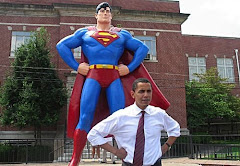
Super Obama Girl

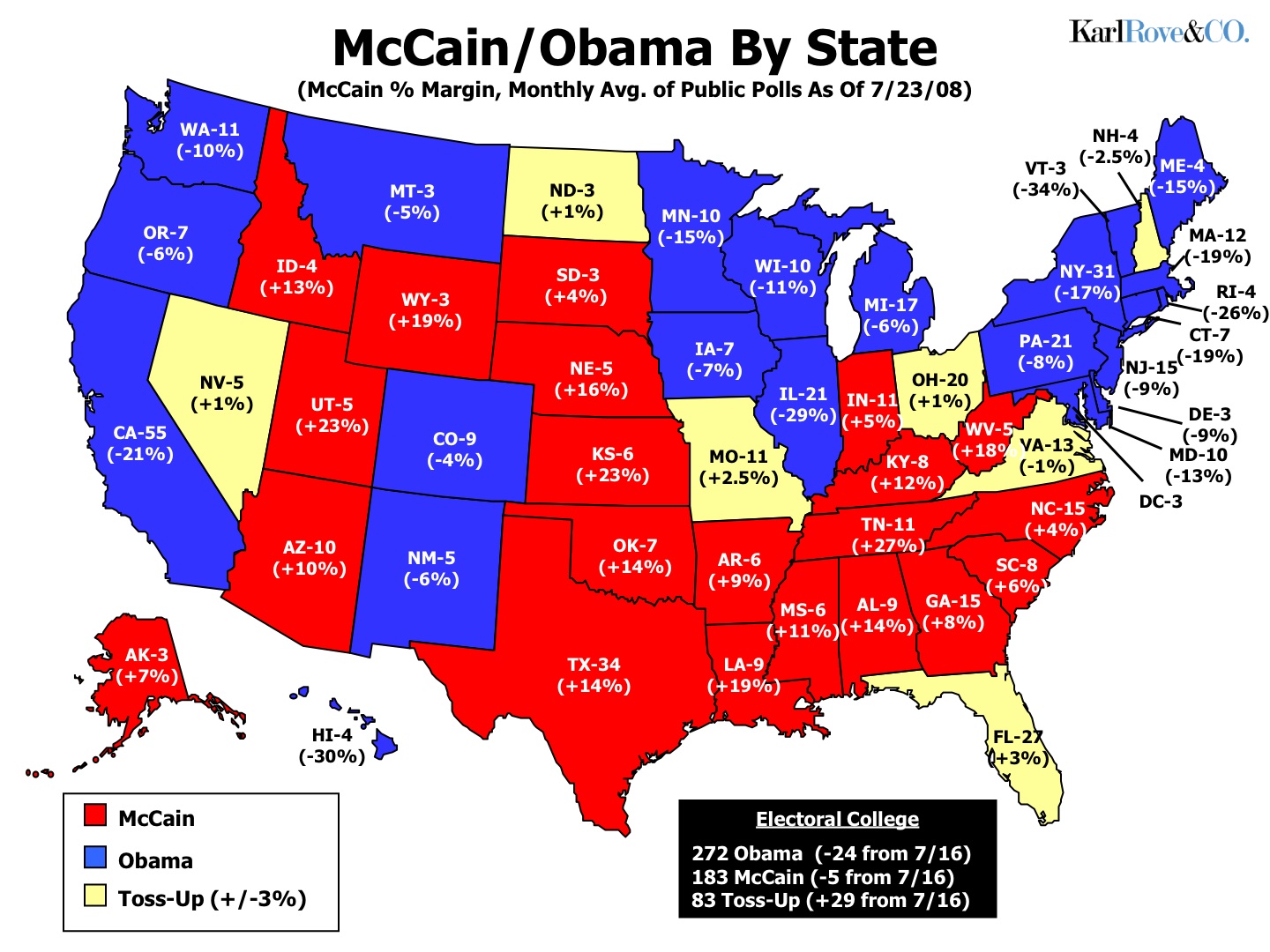
Obama is Winning according to Karl Rove

Obama is Winning according to Karl Rove
Obama=272 * McCain=183 * Toss-up=83