sin to know for whom the bell tolls

Showing posts with label speech. Show all posts

Sunday, July 27, 2008

Service: The Core of Change

One important branch of Obama's campaign is HOPE IN ACTION. This part of the movement (which will continue after he is elected in November and takes office in January) is all about community service. The idea is that we need more than political action to create the changes that this country desperately needs.

We need to roll up our sleeves and work for the change we need!

On Saturday, the local Hope in Action campaign kicked off with a clean-up of Lake Merritt. Over 30 Obama supporters picked up garbage, cleaned up goose poop, raked leaves, and generally beautified Lake Merritt.

We worked with Noel Gallo from Keep Oakland Beautiful (Oakland Public Works) & James Robinson from the Lake Merritt Institute, who organize weekly clean-up projects at Lake Merritt every Saturday & Tuesday (to get involved click here).

We also spoke with folks who were out enjoying the day at the lake about Obama, gave out Obama '08 stickers, told people about the grand opening of the East Bay office, and even registered several voters. People were really grateful for the work that we did to make their experience at Lake Merritt more enjoyable, and I think it is really important to demonstrate with actions (not only words in dramatic speeches) that change is something we can not only believe in, but change is something we will work hard to create.

The success of this event shows how important the HOPE IN ACTION and community service aspects of the campaign are. Barack Obama believes in service to one's community, local organizing for collective benefit, and working towards empowerment together within and among neighborhoods.
“Your own story and the American story are not separate — they are shared. And they will both be enriched if we stand up together, and answer a new call to service to meet the challenges of our new century … I won't just ask for your vote as a candidate; I will ask for your service and your active citizenship when I am president of the United States. This will not be a call issued in one speech or program; this will be a cause of my presidency.” --Barack Obama
A Call to Service: Colorado Springs, Colorado


Obama's policies focus on the role of service in the enactment of "change" that is echoed throughout his campaign speeches. You can read more about Obama's policies on service by clicking here. This is excerpted from an AP article after the Colorado speech above reflecting on Obama's service initiatives (more click here).
Other highlights include: increasing the all-volunteer military, expanding AmeriCorps, doubling the size of the Peace Corps, expanding YouthBuild, in which low-income young people build affordable housing; expanding service programs involving retired people and anyone over 55, and creating a tax credit making the first $4,000 of college tuition free for students who conduct 100 hours of public service a year.
When Barack Obama is president, he will enable all Americans to engage in service to our country. Here are some of his programs and policy initiatives that will build a strong service corps to keep this country functioning well:
  • Expand Corporation for National and Community Service: Obama will expand AmeriCorps from 75,000 slots today to 250,000 and he will focus this expansion on addressing the great challenges facing the nation. He will establish a Classroom Corps to help teachers and students, with a priority placed on underserved schools; a Health Corps to improve public health outreach; a Clean Energy Corps to conduct weatherization and renewable energy projects; a Veterans Corps to assist veterans at hospitals, nursing homes and homeless shelters; and a Homeland Security Corps to help communities plan, prepare for and respond to emergencies.
  • Engage Retiring Americans in Service on a Large Scale: Older Americans have a wide range of skills and knowledge to contribute. Obama will expand and improve programs that connect individuals over the age of 55 to quality volunteer opportunities.
  • Expand the Peace Corps: Obama will double the Peace Corps to 16,000 by 2011. He will work with the leaders of other countries to build an international network of overseas volunteers so that Americans work side-by-side with volunteers from other countries.
  • Show the World the Best Face of America: Obama will set up an America's Voice Initiative to send Americans who are fluent speakers of local languages to expand our public diplomacy. He also will extend opportunities for older individuals such as teachers, engineers, and doctors to serve overseas.
Obama will integrate service into education in America at all levels:
  • Expand Service-Learning in Our Nation's Schools: Obama will set a goal that all middle and high school students do 50 hours of community service a year. He will develop national guidelines for service- learning and will give schools better tools both to develop programs and to document student experience.
  • Expand YouthBuild Program: Obama will expand the YouthBuild program, which gives disadvantaged young people the chance to complete their high school education, learn valuable skills and build affordable housing in their communities. He will grow the program so that 50,000 low-income young people a year a chance to learn construction job skills and complete high school.
  • Require 100 Hours of Service in College: Obama will establish a new American Opportunity Tax Credit that is worth $4,000 a year in exchange for 100 hours of public service a year.
  • Promote College Serve-Study: Obama will ensure that at least 25 percent of College Work-Study funds are used to support public service opportunities instead of jobs in dining halls and libraries.
This video focuses on Obama's initiative to create a fund that would provide $4,000/year to every American who wishes to go to college in exchange for 100 hours of community service.


Obama gave this speech on a college campus in Iowa in December 2007 (full speech here):

When I was about your age, I decided to become a community organizer.... this small group of churches on the south side of Chicago ... offered me a job to come help neighborhoods devastated by steel-plant closings. My mother and grandparents wanted me to go to law school. My friends were applying to jobs on Wall Street. I didn't know a soul in Chicago, and the salary was about $12,000 a year, plus $2,000 to buy an old, beat-up car.

I still remember a conversation I had with an older man before I left. He looked and said, "Barack, I'll give you a bit of advice. Forget this community organizing business and do something that's gonna make you some money. You can't change the world, and people won't appreciate you trying. You've got a nice voice. What you should do is go into television broadcasting. I'm telling you, you've got a future."

Now, he may have had a point about the TV thing. And to tell you the truth, I didn't have a clear answer about what I was doing. I wanted to step into the currents of history and help people fight for their dreams, but didn't know what my role would be. I was inspired by what people like Harris did in the civil rights movement, but when I got to Chicago, there were no marches, no soaring speeches. In the shadow of an empty steel plant, there were just a lot of folks struggling. Day after day, I heard ‘no' a lot more than I heard ‘yes.' I saw plenty of empty chairs in those meetings we put together.

But even as I discovered that you can't bend history to your will, I found that you could do your part to see that - in the words of Dr. King - it "bends toward justice." In church basements and around kitchen tables, block by block, we brought the community together, registered new voters, fought for new jobs, and helped people live lives with some measure of dignity.

Eventually, I realized I wasn't just helping other people. Through service, I found a community that embraced me; a church to belong to; citizenship that was meaningful; the direction I'd been seeking. Through service, I found that my own improbable story fit into a larger American story.

In America, each of us seeks our own dreams, but the sum of those dreams must be greater than ourselves. Because the America we inherited is the legacy of those who struggled, and those who served in so many ways, before us....

It is time to recapture that sense of a common purpose: I am my brother's keeper, I am my sister's keeper. I'm tired of hearing about how America is on the wrong track - I want us to come together to put it on the right track. I'm tired of hearing about red America and blue America - I want to lead a United States of America. I'm tired of talking about what we can't do, or won't do, or won't even try - I want all of us to stand up and to start reaching for what is possible.

That's what history calls us to do. Because loving your country shouldn't just mean watching fireworks on the 4th of July; loving your country must mean accepting your responsibility to do your part to change it. And if you do stand up, I promise you that your life will be richer, and our country will be stronger.

We need your service, right now, in this moment - our moment - in history. I'm not going to tell you what your role should be; that's for you to discover. But I am going to ask you to play your part; ask you to stand up; ask you to put your foot firmly into the current of history. I am asking you to change history's course. And if I have the fortune to be your President, decades from now - when the memory of this or that policy has faded, and when the words that we will speak in the next few years are long forgotten - I hope you remember this as a moment when your own story and the American story came together, and history bent once more in the direction of justice.

Thursday, July 24, 2008

Ich bin OBAMA!

More than 200,000 people watched Barack Obama's speech today at the Victory Column in Berlin's Tiergarten.

Click here for amazing photos of the historic event.
"People of the world – look at Berlin! Look at Berlin, where Germans and Americans learned to work together and trust each other less than three years after facing each other on the field of battle.

Look at Berlin, where the determination of a people met the generosity of the Marshall Plan and created a German miracle; where a victory over tyranny gave rise to NATO, the greatest alliance ever formed to defend our common security.

Look at Berlin, where the bullet holes in the buildings and the somber stones and pillars near the Brandenburg Gate insist that we never forget our common humanity.

People of the world – look at Berlin, where a wall came down, a continent came together, and history proved that there is no challenge too great for a world that stands as one.

Sixty years after the airlift, we are called upon again. History has led us to a new crossroad, with new promise and new peril. When you, the German people, tore down that wall – a wall that divided East and West; freedom and tyranny; fear and hope – walls came tumbling down around the world. From Kiev to Cape Town, prison camps were closed, and the doors of democracy were opened. Markets opened too, and the spread of information and technology reduced barriers to opportunity and prosperity. While the 20th century taught us that we share a common destiny, the 21st has revealed a world more intertwined than at any time in human history....

Poorly secured nuclear material in the former Soviet Union, or secrets from a scientist in Pakistan could help build a bomb that detonates in Paris. The poppies in Afghanistan become the heroin in Berlin. The poverty and violence in Somalia breeds the terror of tomorrow. The genocide in Darfur shames the conscience of us all.

In this new world, such dangerous currents have swept along faster than our efforts to contain them. That is why we cannot afford to be divided. No one nation, no matter how large or powerful, can defeat such challenges alone. None of us can deny these threats, or escape responsibility in meeting them. Yet, in the absence of Soviet tanks and a terrible wall, it has become easy to forget this truth. And if we’re honest with each other, we know that sometimes, on both sides of the Atlantic, we have drifted apart, and forgotten our shared destiny....

People of Berlin – people of the world – this is our moment. This is our time.

I know my country has not perfected itself. At times, we’ve struggled to keep the promise of liberty and equality for all of our people. We’ve made our share of mistakes, and there are times when our actions around the world have not lived up to our best intentions.

But I also know how much I love America. I know that for more than two centuries, we have strived – at great cost and great sacrifice – to form a more perfect union; to seek, with other nations, a more hopeful world....

People of Berlin – and people of the world – the scale of our challenge is great. The road ahead will be long. But I come before you to say that we are heirs to a struggle for freedom. We are a people of improbable hope. With an eye toward the future, with resolve in our hearts, let us remember this history, and answer our destiny, and remake the world once again."

Watch the amazing speech:


For the complete transcript, click here. For more details on Obama's trip to Germany click here, and here, and here.

Earlier today in Berlin, wellwishers cheered Obama's motorcade. As he got out of his car, one man yelled out in English, "Yes we can!" (more)

Here is a video about the background of this historic speech in Berlin today:


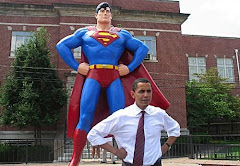
I couldn't resist posting this...

(I think Jesse Jackson is just jealous that someone else is going to be the first African-American President).

Friday, July 18, 2008

Democratic Primaries Victory Speech

I realized I never posted this when it was happening. My mistake.

This is Obama giving his victory speech after his primary season wins:

Wednesday, July 9, 2008

Letter from a Birmingham Jail

Today there is a unique event by supporters of Barack Obama. One blogger, Jake B. suggested that we take some time today to read Martin Luther King's Letter from a Birmingham Jail. He posted the full letter to his blog.

I hope you'll take a few minutes to read the letter: it is a bit lengthy, but fully worth the time it takes to read it (ok, ok the blog post is kind of long too but it's packed with lots of interesting stuff for you!).

In Dr. King's words:
Never before have I written so long a letter. I'm afraid it is much too long to take your precious time. I can assure you that it would have been much shorter if I had been writing from a comfortable desk, but what else can one do when he is alone in a narrow jail cell, other than write long letters, think long thoughts and pray long prayers?
Dr King wrote about the importance of unity and the common fate the binds us all together:
I am cognizant of the interrelatedness of all communities and states. I cannot sit idly by in Atlanta and not be concerned about what happens in Birmingham. Injustice anywhere is a threat to justice everywhere. We are caught in an inescapable network of mutuality, tied in a single garment of destiny. Whatever affects one directly, affects all indirectly. Never again can we afford to live with the narrow, provincial "outside agitator" idea. Anyone who lives inside the United States can never be considered an outsider anywhere within its bounds.
For more on Martin Luther King, check out Wikipedia, the Official MLK Center Website, and the Nobel Peace Prize Website.

The Letter from a Birmingham Jail is addressed to southern Christian religious leaders who had criticized his methods.
Seldom do I pause to answer criticism of my work and ideas. If I sought to answer all the criticisms that cross my desk, my secretaries would have little time for anything other than such correspondence in the course of the day, and I would have no time for constructive work. But since I feel that you are men of genuine good will and that your criticisms are sincerely set forth, I want to try to answer your statement in what I hope will be patient and reasonable terms.
Here is some background on how MLK was arrested in Birmingham and ended up in jail, where he composed the letter.


One of the most important messages that Dr. King brought to the American people is the "Urgency of Now"
For years now I have heard the word "Wait!" It rings in the ear of every Negro with piercing familiarity. This "Wait" has almost always meant "Never."

We must come to see, with one of our distinguished jurists, that "justice too long delayed is justice denied."
We have waited for more than 340 years for our constitutional and God given rights. The nations of Asia and Africa are moving with jetlike speed toward gaining political independence, but we still creep at horse and buggy pace toward gaining a cup of coffee at a lunch counter.

Perhaps it is easy for those who have never felt the stinging darts of segregation to say, "Wait."

But when you have seen vicious mobs lynch your mothers and fathers at will and drown your sisters and brothers at whim; when you have seen hate filled policemen curse, kick and even kill your black brothers and sisters;

when you see the vast majority of your twenty million Negro brothers smothering in an airtight cage of poverty in the midst of an affluent society;

when you suddenly find your tongue twisted and your speech stammering as you seek to explain to your six year old daughter why she can't go to the public amusement park that has just been advertised on television, and see tears welling up in her eyes when she is told that Funtown is closed to colored children, and see ominous clouds of inferiority beginning to form in her little mental sky, and see her beginning to distort her personality by developing an unconscious bitterness toward white people;

when you have to concoct an answer for a five year old son who is asking: "Daddy, why do white people treat colored people so mean?"; ...

when your first name becomes "nigger," your middle name becomes "boy" (however old you are) and your last name becomes "John," and your wife and mother are never given the respected title "Mrs.";

when you are harried by day and haunted by night by the fact that you are a Negro, living constantly at tiptoe stance, never quite knowing what to expect next, and are plagued with inner fears and outer resentments;

when you are forever fighting a degenerating sense of "nobodiness"--then you will understand why we find it difficult to wait.


There comes a time when the cup of endurance runs over, and men are no longer willing to be plunged into the abyss of despair.
Barack Obama has recently spoken about the Urgency of Now, invoking Dr. King's message of action, hope, faith, unity, and the need to act now to reverse the deterioration of our country (our "moral deficit" and our "empathy deficit").

Of course, everyone knows Obama talks a lot about hope, as Dr. King did.

"I couldn't have gotten here without some hope!

My daddy left me when I was 2 years old
I needed some hope to get here!
I was raised by a single mother
I needed some hope to get here!
I got in trouble when I was a teenager;
did some things folks don't like to talk about

I needed some hope to get here!

I wasn't born into money or great wealth or great privilege or status

I was given love, an education and some hope
That's what I got!
that's my birthright!

so I talk about hope
I put "hope" on my campaign signs
doesn't even have my name on them sometimes: just says "HOPE"! ...

Some ... say I'm peddling false hopes, 'get a reality check' they tell me...
the implication is that if you are hopeful
that you somehow must be engaging in wishful thinking,
your head must be in the clouds,
that you must be passive and just sit back and wait for things to happen to you...


and so I have to explain to people: That's not what hope is
Hope is not blind optimism:
Hope is not ignorance of the barriers, and hurdles, and hazards that stand in your way
Hope is just the opposite!...

Nothing in this country worthwhile has ever happened

except someone somewhere decided to hope


That's how this country was founded because a group of patriots decided they were going to take on the British Empire:
no one was putting their money on them.

That's how slaves and abolitionists resisted that evil system
That's how a new President was able to chart a course to ensure that this nation would no longer remain half slave and half free.

That's how the greatest generation defeated fascism
and overcame a great depression

That's how women won the right to vote
That's how workers won the right to organize

That's how young people and old people and middle-aged folks were willing to walk instead of riding the buses and
folks came down on freedom rides
They marched, and they sat in, and they were beaten,
and firehoses were set on them

and dogs were set on them
and some went to jail
and some died for freedom's cause


That is what hope is:
imagining and fighting for and struggling for
and sometimes dying for

what didn't seem possible before

there's nothing naive about that

There's no false hopes in that

I don't believe in false hopes

If John F. Kennedy
had looked up at the moon

and said,


"That's too far!

False Hopes:
We CAN'T go there!"


If Dr. King had stood
on the Lincoln Memorial


and said,

"Y'all Go home!
We
CAN'T overcome!"


There's no such thing as false hopes, but what I know deep in my heart is that we cannot bring about change unless we are united."


"Unity is the great need of the hour.
That is what Dr. King said. It is the great need of this hour as well.
Not because it sounds pleasant, not because it makes us feel good
but it is because it is the only way we can overcome
the essential deficit that exists in this country...


Unity is the great need of the hour.
Unity is how we shall overcome!
"


Obama spoke at Dr. King's church in Georgia on MLK's birthday this year. His remarks are thoughtful, reverent, and contemporary (it is a long speech--about 30 minutes, but it is worth watching until the end for an amazing story about "Ashley"):

Barack Obama: January 20th, 2008
Atlanta, Georgia: Ebenezer Baptist Church

"In the words of Dr. King:
'We are all tied together in a single garment of destiny'...

If we are honest with ourselves,
we must admit that none of our hands are entirely clean...

Let us say that on this day of all days, each of us carries with us the task
of changing our hearts and minds:
the divisions, the stereotypes, the scape-goating,
the ease with which we we blame the plight of ourselves on others;
All of that distracts us from the common challenges that we face:
war and poverty, inequality and injustice!

We can no longer afford to build ourselves up by tearing each other down!
We can no longer afford to traffick in lies or fear or hate:
it is the poison that we must purge from our politics,
the wall that we must tear down before the hour grows too late.

Because if Dr. King could love his jailer,
if he could call upon the faithful
who once sat where you do to forgive those
who had set dogs and firehoses upon them,

then surely we could look past what divides us in our time
and bind up our wounds and
erase the sympathy deficit that exists in our hearts.
But if changing our hearts and minds is the first critical step:
we cannot stop there!"

During one of the million Democratic primary debates, the candidates were asked whom they thought Dr. King would support for President if he were alive during this election season. Each candidate had a perfect little answer about why MLK would have supported them, but Barack Obama's answer surprised me (in a way that I am now accustomed to--Barack has a way of stepping outside the box and giving a thoughtful honest answer, rather than spitting out a perfectly rehearsed soundbite).
Obama said King would not endorse any of them:
"He would call on the American people to hold us accountable." King, said Obama, believed as he does that "change does not happen from the top down ... it happens from the bottom up."

Dr. King: "1963 is not an end, but a beginning!"

Dr. King outlined the strategy behind the nonviolent protests and acts of civil disobedience that he had been organizing in his letter from a Birmingham Jail:
You may well ask: "Why direct action? Why sit ins, marches and so forth? Isn't negotiation a better path?" ...

Nonviolent direct action seeks to create such a crisis and foster such a tension that a community which has constantly refused to negotiate is forced to confront the issue. It seeks so to dramatize the issue that it can no longer be ignored.

My citing the creation of tension as part of the work of the nonviolent resister may sound rather shocking. But I must confess that I am not afraid of the word "tension." I have earnestly opposed violent tension, but there is a type of constructive, nonviolent tension which is necessary for growth....

The purpose of our direct action program is to create a situation so crisis packed that it will inevitably open the door to negotiation.
Dr. King also addressed the ethical confound of breaking the law:

You express a great deal of anxiety over our willingness to break laws. This is certainly a legitimate concern. Since we so diligently urge people to obey the Supreme Court's decision of 1954 outlawing segregation in the public schools, at first glance it may seem rather paradoxical for us consciously to break laws.

One may well ask: "How can you advocate breaking some laws and obeying others?"

The answer lies in the fact that there are two types of laws: just and unjust. I would be the first to advocate obeying just laws. One has not only a legal but a moral responsibility to obey just laws. Conversely, one has a moral responsibility to disobey unjust laws. I would agree with St. Augustine that "an unjust law is no law at all."
And specifically discussed civil disobedience as obedience to a higher law:
I submit that an individual who breaks a law that conscience tells him is unjust, and who willingly accepts the penalty of imprisonment in order to arouse the conscience of the community over its injustice, is in reality expressing the highest respect for law.

Of course, there is nothing new about this kind of civil disobedience.... In our own nation, the Boston Tea Party represented a massive act of civil disobedience.

We should never forget that everything Adolf Hitler did in Germany was "legal" and everything the Hungarian freedom fighters did in Hungary was "illegal." It was "illegal" to aid and comfort a Jew in Hitler's Germany. Even so, I am sure that, had I lived in Germany at the time, I would have aided and comforted my Jewish brothers.
Here is video footage of MLK talking about the strategy of the Civil Rights Movement in America:


"But there is something I must say to my people,
who stand on the warm threshold
which leads into the palace of justice:


In the process of gaining our rightful place,
we must not be guilty of wrongful deeds.
Let us not seek to satisfy our thirst for freedom
by drinking from the cup of bitterness and hatred!

We must forever conduct our struggle
on the high plane of dignity and discipline.
We must not allow our creative protests
to degenerate into physical violence

Again and again

We must rise to the majestic heights
of meeting physical force with soul force!"


OK I love this song: and the references to MLK and Jesus are thinly veiled (if they are veiled at all). This video has paired up some powerful historic photographs with U2's song "Pride (In the Name of Love)" and Dr. King's speeches; since I saw the video the song doesn't sound right without Dr. King's words mixed in there. Enjoy:
"Early morning, April 4th:
a shot rings out in the Memphis sky

'Free at last'; they took your life
They could not take your pride.
In the name of love
One more in the name of love"

On April 3, 1968, the day before Martin Luther King was assassinated in Memphis, he spoke these words:
Like anybody I would like to live a long life:
longevity has its place;

but I'm not concerned about that now.
I just want to do God's will
and He has allowed me to go up to the mountain

and I have looked over and I've seen the promised land
I may not get there with you,
but I want you to know tonight that we as a people will get to the promised land
so I'm happy tonight.
I'm not worried about anything!
I'm not fearing any man!

Mine eyes have seen the glory of the coming of the Lord!
Five years earlier, in 1963, Martin Luther King closed his letter from a Birmingham jail with this. I invite you to hope with me:
Let us all hope that the dark clouds of racial prejudice will soon pass away and the deep fog of misunderstanding will be lifted from our fear drenched communities, and in some not too distant tomorrow the radiant stars of love and brotherhood will shine over our great nation with all their scintillating beauty.

Tuesday, July 1, 2008

A True Patriot

The values of honesty and integrity have defined Barack Obama's campaign for President of the United States.

Today, Obama spoke in Independence, Missouri about his deep patriotism and love for this great country. You can watch the speech, read the speech, or check out The CNN story.

"I have always taken my deep and abiding love for this country as a given.

It was how I was raised: It was what propelled me into public service.

It is why I am running for President!"
"And yet, at certain times over the last 16 months, I have found for the first time my own patriotism challenged-- at times as a result of my own carelessness, more often as a result of the desire by some to score political points and raise fears and doubts about who I am and what I stand for."Obama vowed to never question the patriotism of others in the campaign, adding "I will not stand idly by when I hear others question mine."
Obama said that "patriotism starts as a gut instinct, a loyalty and love for country that's rooted in some of my earliest memories." As he grew up, Obama's patriotism matured to something that "would survive my growing awareness of our nation's imperfections: its ongoing racial strife; the perversion of our political system that were laid bare during the Watergate hearings; the wrenching poverty of the Mississippi Delta and the hills of Appalachia."


Barack Obama commented:
"Given the enormous challenges that lie before us, we can no longer afford these sorts of divisions," he said. "None of us expect that arguments about patriotism will, or should, vanish entirely; after all, when we argue about patriotism, we are arguing about who we are as a country, and more importantly, who we should be....

"But surely, we can agree that no party or political philosophy has a monopoly on patriotism. And surely, we can arrive at a definition of patriotism that, however rough and imperfect, captures the best of America's common spirit."

Obama said he learned that "what makes America great has never been its perfection, but the belief that it can be made better."

Obama exemplifies the best kind of patriotism: love for one's country based on a realistic appraisal of its strengths and challenges. The kind of love that Obama has for America is the kind of love a father has for a child who has behaved badly: he loves the child so he helps the child learn to be better. Obama's vision for America is like the dreams that a father has for his infant as he holds the baby in his arms: he sees the potential in the new life while at the same time seeing the baby who exists today. He nurtures the baby to manifest its true potential, which is what Barack Obama promises for America. Let's not focus on petty and superficial displays of patriotism like flag pins and hand positions: Let's look deeper and embrace the powerful love of country that Barack Obama espouses.

Monday, June 30, 2008

Land of Lincoln


Barack Obama has been compared to Abraham Lincoln by many historians, pundits, personalities, and ordinary citizens. One website encourages the reader who compares Barack Obama to Abraham Lincoln to "tread lightly... but tread" nonetheless. I invite you to tread with me upon these fertile grounds (especially since every Republican baselessly compares himself to Reagan and every Democrat--plus Dan Quayle (haha)--wants to be the next JFK). In most cases, the appropriate response to these silly comparisons of mediocre politicians to great historical figures is some variation of: "Senator, you are no Jack Kennedy."

But this comparison of Barack Obama and Abraham Lincoln is different than these baseless ones, and here's why:

Lincoln and Obama herald from the great state of Illinois; both were lawyers, criticized for their lack of "experience" to be President (Abe: 8 yrs in IL House of Reps + 2yrs in US House of Reps; Barack: 8 yrs in IL Senate + 2 yrs in US Senate). Each was seeking his party's nomination, running against a Senator from New York (Obama vs. Clinton; Lincoln vs. Seward). Neither had a strong early relationship with his father, and both were self-made men, viewed with skepticism by the Washington elite. According to historian, critic, and columnist Gary Wills (read the full article):

Neither man fit the conventions of a statesman in his era. Lincoln, thin, gangling, and unkempt, was considered a backwoods rube, born in the frontier conditions of Kentucky, estranged from his father, limited to a catch-as-catch-can education. He was better known as a prairie raconteur than as a legal theorist or prose stylist. Obama, of mixed race and foreign upbringing, had barely known his father, and looked suspiciously "different."
Both Barack Obama and Abraham Lincoln each gave important speeches that focused on the similarities of the American people, which vastly outweigh any differences that might on the surface appear to be deeply divisive. "We are not as divided as our politics suggest" says Barack in reference to "red" and "blue" states: "There are no red states and blue states; There is the UNITED States!" (Obama: Democratic Convention 2004; Natl Constitution Center 2008). During Lincoln's time, the divisions were not red and blue, but north and south. In his speeches, Lincoln focused on people's common interests and ideals , rather than their differences (Cooper Union 1860).

Barack Obama's gave a speech titled, "A More Perfect Union" at the National Constitution Center in Philadelphia in March of 2008.

We cannot solve the challenges of our time unless we solve them together, unless we perfect our union.

We may have different stories,
but we have common hopes.


Gary Wills concluded:
But what is of lasting interest is their similar strategy for meeting the charge of extremism. Both argued against the politics of fear. Neither denied the darker aspects of our history, yet they held out hope for what Lincoln called here the better "lights of current experience"—what he would later call the "better angels of our nature." Each looked for larger patterns under the surface bitternesses of their day. Each forged a moral position that rose above the occasions for their speaking.
In Lincoln's most famous speech, he invoked a biblical passage:
"A house divided against itself cannot stand." I believe this government cannot endure permanently half slave and half free. I do not expect the Union to be dissolved; I do not expect the house to fall; but I do expect it will cease to be divided.
Barack Obama announced his candidacy for President at the Old State Capitol building where Abraham Lincoln delivered his famous "House Divided" speech in 1858

It was here, in Springfield, where North, South, East and West come together that I was reminded of the essential decency of the American people -- where I came to believe that through this decency, we can build a more hopeful America.

And that is why, in the shadow of the Old State Capitol, where Lincoln once called on a divided house to stand together, where common hopes and common dreams still, I stand before you today to announce my candidacy for President of the United States....

Each and every time, a new generation has risen up and done what's needed to be done. Today we are called once more -- and it is time for our generation to answer that call.

For that is our unyielding faith -- that in the face of impossible odds, people who love their country can change it.

That's what Abraham Lincoln understood. He had his doubts. He had his defeats. He had his setbacks. But through his will and his words, he moved a nation and helped free a people. It is because of the millions who rallied to his cause that we are no longer divided, North and South, slave and free. It is because men and women of every race, from every walk of life, continued to march for freedom long after Lincoln was laid to rest, that today we have the chance to face the challenges of this millennium together, as one people -- as Americans.
Obama concluded his speech:
By ourselves, this change will not happen. Divided, we are bound to fail.

But the life of a tall, gangly, self-made Springfield lawyer tells us that a different future is possible.

He tells us that there is power in words.

He tells us that there is power in conviction.

That beneath all the differences of race and region, faith and station, we are one people.

He tells us that there is power in hope.

As Lincoln organized the forces arrayed against slavery, he was heard to say: "Of strange, discordant, and even hostile elements, we gathered from the four winds, and formed and fought to battle through."
The most important character element and ideology that Obama and Lincoln share is an understanding that we are one nation, one people, and that what seperates us is not nearly as profound as our common hopes, dreams, and values. Lincoln and Obama display the committment to bringing their "enemies" to the table. Lincoln famously filled his cabinet with his most vocal critics, and obviously he took an unpopular stand against the secession of the South.

Barack Obama actively seeks the opinions, council, and collaboration of those whom at first glance would appear to be "enemies" or "critics." He has demonstrated time and time again how important it is to create bipartisan coalitions, and he has effectively created opportunities for collaboration among disperate elements by highlighting the benefits for each participating member to help everyone "buy in" to the process.

Obviously, America was more explicitly divided during Lincoln's times (states are not threatening to secede in 2008). However, these modern times bring new kinds of divisions that are more nuanced and less clear. The intricacies of the global economy, the unspoken but powerful class system in America, the pervasive and underlying nature of racism, sexism, homophobia, xenophobia and classism, and the problems with the economy and social services compound one another and create a hornet's nest of issues that CANNOT be solved by one man or one party alone.

Barack Obama knows, just like Lincoln did: the problems of this complex world require the collaboration of many diverse minds, hearts, and hands.

Saturday, June 28, 2008

Veterans for Obama; Obama for Veterans

Barack Obama's spoke to veterans in Las Cruces, New Mexico on Memorial Day (May 26, 2008).


I speak to you today with deep humility. My grandfather marched in Patton's Army, but I cannot know what it is to walk into battle like so many of you. My grandmother worked on a bomber assembly line, but I cannot know what it is for a family to sacrifice like so many of yours have.

I am the father of two young girls, and I cannot imagine what it is to lose a child. My heart breaks for the families who've lost a loved one.

These are things I cannot know. But there are also some things I do know.

I know that our sadness today is mixed with pride; that those we've lost will be remembered by a grateful nation; and that our presence here today is only possible because your loved ones, America's patriots, were willing to give their lives to defend our nation.

I know that while we may come from different places, cherish different traditions, and have different political beliefs, we all – every one of us – hold in reverence those who've given this country the full measure of their devotion.

And I know that children in New Mexico and across this country look to your children, to your brothers and sisters, mothers and fathers, and friends – to those we honor today – as a shining example of what's best about America.

Their lives are a model for us all.
Barack Obama values the men and women of our nation's armed forces, and wants to truly support them as they put themselves in harm's way to protect the nation and fight against tyranny, fascism, and injustice. He wants to provide veterans who are injured or traumatized with the full extent of the care they need. Please click here to read Barack Obama's policy statements on Veterans Affairs and the treatment that veterans should receive.



The current administration rushed into wars without considering the true threat to America and the world's stability. There have been heavy casualties in Iraq and Afghanistan, and these wars have destabilized the region (turning up the heat on existing conflicts such as the Kurdistan/Turkey border problems).

Barack Obama will not send the young people of America overseas to sacrifice their lives without carefully considering the true nature of the threat. Please click here to read some of Obama's statements on foreign policy and deployment of the US armed forces. Links to Policies on Specific Areas: Iraq, Iran, Africa, Israel , South America
When I am this party's nominee, my opponent will not be able to say that I voted for the war in Iraq; or that I gave George Bush the benefit of the doubt on Iran; or that I supported Bush-Cheney policies of not talking to leaders that we don't like. And he will not be able to say that I wavered on something as fundamental as whether or not it is ok for America to torture — because it is never ok… I will end the war in Iraq… I will close Guantanamo. I will restore habeas corpus. I will finish the fight against Al Qaeda. And I will lead the world to combat the common threats of the 21st century: nuclear weapons and terrorism; climate change and poverty; genocide and disease. And I will send once more a message to those yearning faces beyond our shores that says, "You matter to us. Your future is our future. And our moment is now. (Barack Obama, Des Moines, Iowa, Veteran's Day, November 10, 2007).
Here are some of Barack Obama's thoughts on Building a 21st Century Militia:
The Problem: The excellence of our military is unmatched. But as a result of a misguided war in Iraq, our forces are under pressure as never before. Obama will make the investments we need so that the finest military in the world is best-prepared to meet 21st-century threats.

Rebuild Trust: Obama will rebuild trust with those who serve by ensuring that soldiers and Marines have sufficient training time before they are sent into battle.

Expand the Military: We have learned from Iraq that our military needs more men and women in uniform to reduce the strain on our active force. Obama will increase the size of ground forces, adding 65,000 soldiers to the Army and 27,000 Marines.

New Capabilities: Obama will give our troops new equipment, armor, training, and skills like language training. He will also strengthen our civilian capacity, so that our civilian agencies have the critical skills and equipment they need to integrate their efforts with our military.

Strengthen Guard and Reserve: Obama will restore the readiness of the National Guard and Reserves. He will permit them adequate time to train and rest between deployments, and provide the National Guard with the equipment they need for foreign and domestic emergencies. He will also give the Guard a seat at the table by making the Chief of the National Guard a member of the Joint Chiefs of Staff.
Here is what Veterans have to say about Obama

Iraq and Afghanistan Veterans for Obama:


New Hampshire Veterans for Obama:


Pennsylvania Veterans for Obama:


Virginia Veterans for Obama:

Tuesday, June 24, 2008

Obama Speaks to His Staff

Follow the link to watch a short excerpt from the video of Barack Obama addressing his staff after becoming the presumptive Democratic nominee. If you follow this link, it will take you to the video and also gives you an opportunity to make a donation to the campaign that will be matched by another supporter (doubling its impact!). You don't have to donate to watch the video, but it is fun and good for the soul!

Here is the full 13-minute video of Obama's informal speech to staff & volunteers in his Chicago campaign headquarters:

Friday, June 20, 2008

Audacity of Hope (Remix)

This is a remix of Obama's speech with music: very powerful:


Part 1 of Barack Obama's Speech at the 2004 Democratic National Convention


Part 2 of the speech

Barack Spoke at Dr. King's Church

Monday, June 9, 2008

Hope Changes Everything

Barack Obama has brought a message of Hope and Change to America at a time when many Americans are disenfranchised and skeptical about their government. His campaign has infused the power of hope into the American people and has inspired record numbers of people to register to vote, to donate to political campaigns, and to get involved with the political process.

Barack Obama Logo

Ruby's Been to the Mile-High Mountaintop

We WILL Get there Together!

People All Over the Country Support Obama

YES WE CAN!

Ruby's Taking it to the Swing States!

Obama's Blueprint for Change

To print or email Obama's Blueprint for Change, use the "iPaper" button below. To read it online, "maximize" the size using the farthest right button, which looks like a small rectangle inside a larger one.
Read this document on Scribd: Obama's Blueprint For Change
To download, click "Obama's Blueprint for Change" above.

I Got A Crush on Obama!

Countdown Until Bush is Out of Office

Super Obama Girl

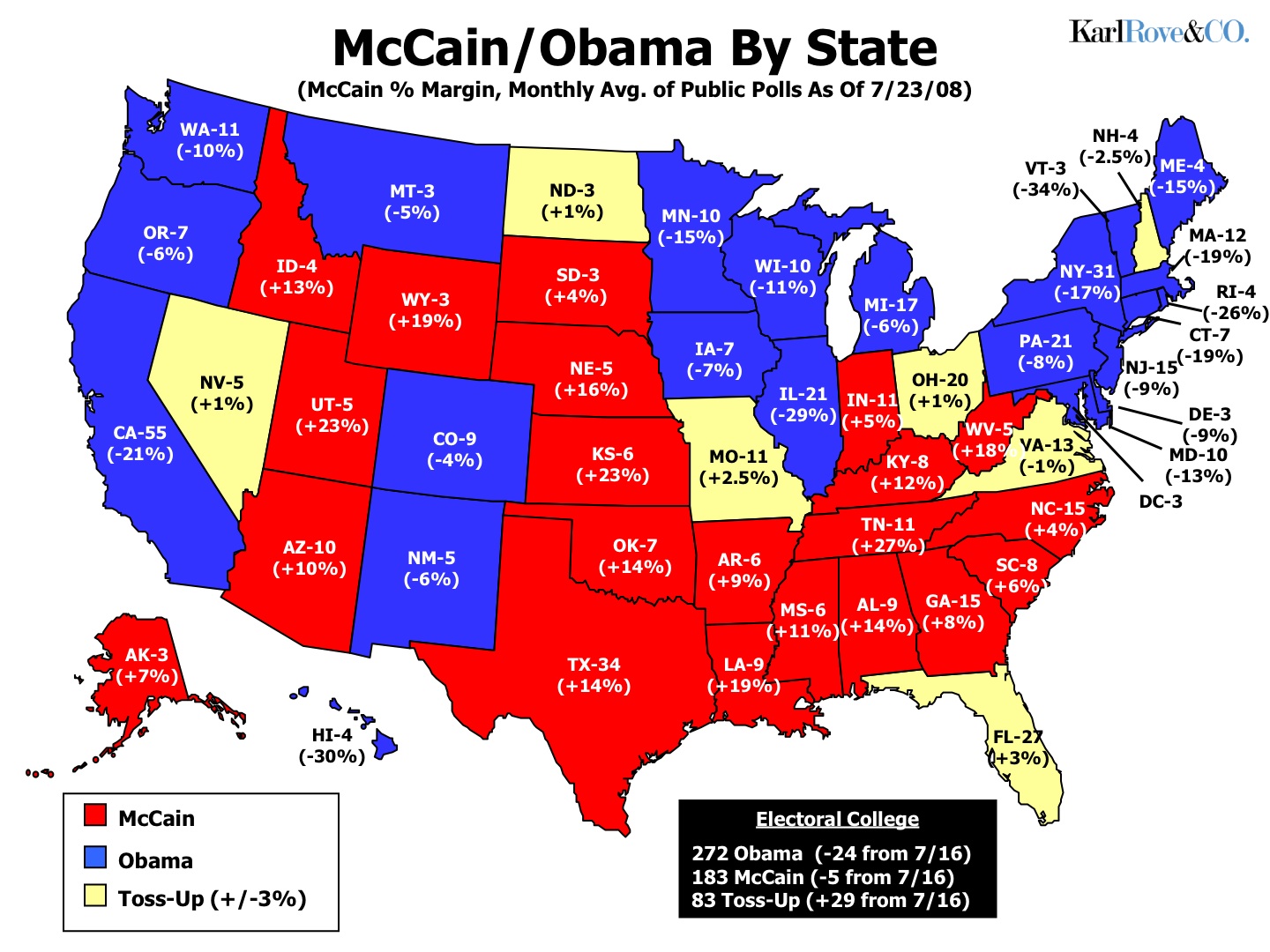
Obama is Winning according to Karl Rove

Obama is Winning according to Karl Rove
Obama=272 * McCain=183 * Toss-up=83